

0 грн.
Checkout
Ends
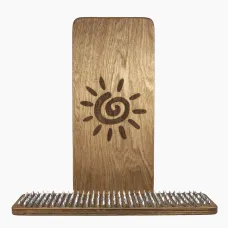
The name of the boards comes from the Sanskrit root sādh, which means "to achieve a goal," "to straighten," or "to gain control over something." Sadhu boards are a powerful tool for spiritual practice, strengthening the body and spirit, maintaining h..
1 500 грн.
Ex Tax: 1 500 грн.
Ends
The name of the boards comes from the Sanskrit root sādh, which means "to achieve a goal," "to straighten," or "to gain control over something." Sadhu boards are a powerful tool for spiritual practice, strengthening the body and spirit, maintaining h..
1 600 грн.
Ex Tax: 1 600 грн.
Ends
The name of the boards comes from the Sanskrit root sādh, which means "to achieve a goal," "to straighten," or "to gain control over something." Sadhu boards are a powerful tool for spiritual practice, strengthening the body and spirit, maintaining h..
1 600 грн.
Ex Tax: 1 600 грн.
The name of the boards comes from the Sanskrit root sādh, which means "to achieve a goal," "to straighten," or "to gain control over something." Sadhu boards are a powerful tool for spiritual practice, strengthening the body and spirit, maintaining h..
1 700 грн.
Ex Tax: 1 700 грн.
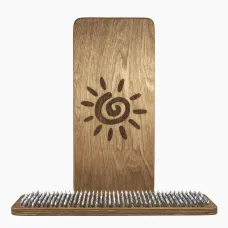
The name of the boards comes from the Sanskrit root sādh, which means "to achieve a goal," "to straighten," or "to gain control over something." Sadhu boards are a powerful tool for spiritual practice, strengthening the body and spirit, maintaining h..
1 700 грн.
Ex Tax: 1 700 грн.
Ends
The name of the boards comes from the Sanskrit root sādh, which means "to achieve a goal," "to straighten," or "to gain control over something." Sadhu boards are a powerful tool for spiritual practice, strengthening the body and spirit, maintaining h..
1 850 грн.
Ex Tax: 1 850 грн.

Patented design that allows for connecting a muscle stimulator⚡Learn more about the design features and their advantages in the article in the Blog section.Sadhu boards for the nail-standing practice of advanced difficulty le..
2 850 грн.
Ex Tax: 2 850 грн.
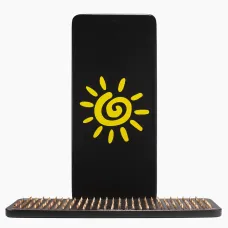
Patented design that allows for connecting a muscle stimulator⚡Learn more about the design features and their advantages in the article in the Blog section.Sadhu boards for the nail-standing practice of advanced difficulty le..
3 100 грн.
Ex Tax: 3 100 грн.

Patented design that allows for connecting a muscle stimulator⚡Learn more about the design features and their advantages in the article in the Blog section.Sadhu boards for the nail-standing practice of regular difficulty level with a nail step of 10..
3 200 грн.
Ex Tax: 3 200 грн.
Ends
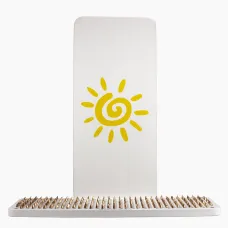
Patented design that allows for connecting a muscle stimulator⚡Learn more about the design features and their advantages in the article in the Blog section.Sadhu boards for the nail-standing practice of regular difficulty level with a nail step of 10..
3 350 грн.
Ex Tax: 3 350 грн.
Ends
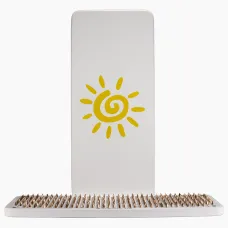
Patented design that allows for connecting a muscle stimulator⚡Learn more about the design features and their advantages in the article in the Blog section.Sadhu boards for the nail-standing practice of beginner difficulty level with a..
3 550 грн.
Ex Tax: 3 550 грн.

Patented design that allows for connecting a muscle stimulator⚡Learn more about the design features and their advantages in the article in the Blog section.Sadhu boards for the nail-standing practice of beginner difficulty level with a..
3 800 грн.
Ex Tax: 3 800 грн.
Sadhu Boards for Nail Standing, when used skillfully, are an effective tool for self-discovery, willpower training, and achieving desires.
The unique feature of our board is the support for the function of muscle stimulation or microcurrent reflex therapy, which is widely used in traditional medicine for the treatment and restoration of the natural functioning of muscles, internal organs, body shape correction, cellulite treatment, muscle strengthening, treatment of tears, and sprains. All nails are connected in a single circuit, allowing current to flow between them.
The benefit of standing on nails lies in stimulating of biologically active points on the sole. Immediately upon stepping on the nails, a sensation of pain arises. The natural reaction to pain is an increase in the levels of the hormones oxytocin and endorphins in the body, which are natural pain relievers and reduce fear. This, in turn, activates metabolic processes, helps with fatigue, and headaches. After nail therapy, the body experiences calmness, muscle relaxation, mild euphoria, and improved concentration. Due to the increase in the mentioned hormones, an anti-stress effect is created, willpower is strengthened, and emotions and thoughts are better controlled. As a result, the nervous system becomes significantly stronger and more resistant to stress, providing additional opportunities for personal growth, easier finding answers to personal questions, and increased productivity. It is for these qualities that Sadhu boards are loved by office workers, top managers, people of creative professions, and others.
The practice of standing on nails becomes more enjoyable over time and can even become a part of daily life. To ensure that your first attempts are successful, it's important to understand which board design will work best for you and how to use it correctly.
The Blog section on the website contains all the necessary information for successful practice. You can also watch video material on Instagram (with English description). You will learn about the criteria for choosing a model, practice tips, safety rules, contraindications, and more.
Collapse