

0 грн.
CheckoutChoosing a sadhu board design

The main characteristic of the board is the distance between the nails, often referred to as the "nail pitch." The closer the nails are to each other, the easier it is to stand on them. However, with a small nail pitch, it is impossible to achieve significant results from the practice, as you won't experience the depth of sensations for which this practice exists. This characteristic should be given the most attention when choosing a board. If you choose a pitch that is too large for you, it will be difficult to start with such a board. On the other hand, a small pitch will quickly become too easy for training, and you will need to purchase a version with a larger pitch. There are average data that can help you choose the appropriate nail distance. An 8 mm pitch is the easiest option for beginners and those with a low pain threshold. A 10 mm pitch is optimal for both beginners and practitioners. By choosing a 10 mm pitch, a beginner can gradually increase the duration of training and eventually stick with this pitch. Pitches of 12 mm and 15 mm are chosen by experienced practitioners who find the 10 mm pitch insufficient. In rare cases, highly prepared and motivated practitioners order pitches of 18, 20, or 22 mm to achieve the desired effect.
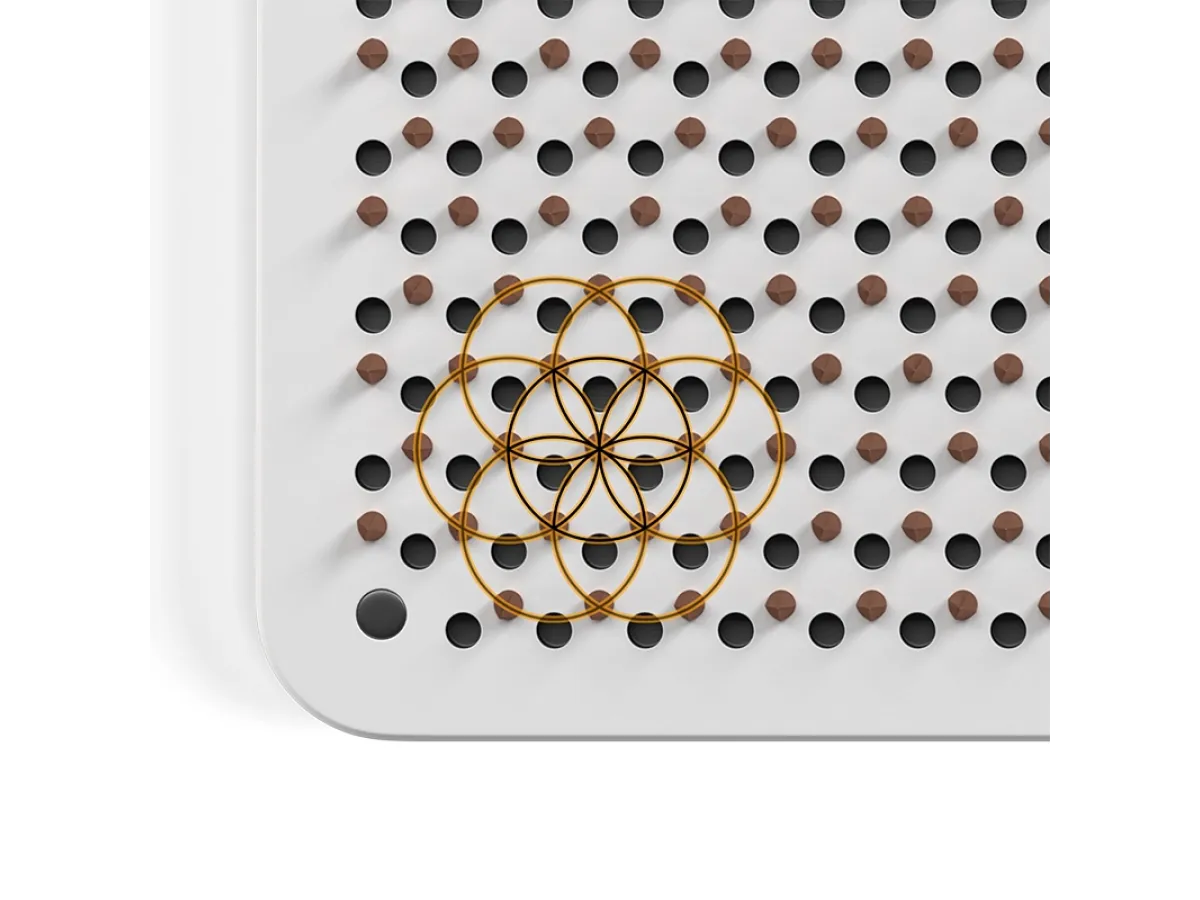
In addition to the distance between the nails, the arrangement of the nails on the board is also important. There are several types of patterns, such as diamond or square, but the best is the hexagon (hexagon). This figure is also known as the "flower of life," and it evenly distributes the load on the sole, with the distance between any adjacent nails being the same in all directions. The hexagon is used on our boards.
The length of the nails is not practically significant, as a few millimeters is sufficient for practice. Boards with long nails may have aesthetic value but come with more weight and bulk, making them less convenient to use, especially when carrying them. Modern trends demand simplicity and functionality. On our boards, the nail length is sufficient for effective practice while ensuring compactness and lightness.
Copper is the most suitable material for the nails on the boards. Pure copper has high corrosion resistance: oxidation products form only a thin surface layer at normal temperature. In dry air, these are copper oxides (red Cu2O is almost invisible, black CuO causes darkening), while in a humid atmosphere containing carbon dioxide, copper becomes covered with a greenish patina of basic copper carbonate. Copper is a low-activity metal that does not interact with water, alkali solutions, hydrochloric and diluted sulfuric acid, and is used in many industries, including the food industry. A major advantage of copper is its high electrical conductivity, which is particularly important for boards with electrostimulation, a production I am involved in. Copper’s resistance to electric current is 0.017 μΩ·m, close to that of silver. For comparison, the resistance of iron is 0.098 μΩ·m, almost six times higher. The greatest advantage of copper in nail-standing practice is its bacteriostatic, antifungal effect, which is important for maintaining hygiene and board care.
An alternative material for nails is steel coated with zinc. This is widely known as galvanized nails. The term "zinc nails" is incorrect from an engineering perspective, as the nails themselves are not made from zinc but are protected from corrosion by a zinc coating. The lifespan of the nails depends on the thickness and uniformity of this zinc coating. Zinc-coated nails have a bright silver surface, sometimes with a yellow or green tint. Zinc coating is not perfect and has certain limitations. You should avoid buying boards with galvanized nails if:
- You plan to practice standing on Sadhu boards in regions with marine or tropical environments. Winds and saltwater bodies saturate microscopic droplets of water in the air with salts, which settle on the surface and cause rapid and severe corrosion of the zinc coating;
- The boards will be used mostly outdoors, especially where moisture condensation in the air is possible (dew formation), or in rooms with air humidity above 70%.
The most significant advantage of galvanized nails compared to copper is the much lower production cost. As of the time of writing this article (2024), the cost of copper nails is approximately seven times higher than that of galvanized nails.
Before buying Sadhu boards with aluminum or bamboo nails, you need to consider some features of these materials.
Aluminum forms oxides on the surface when in contact with air and chemicals, which can negatively affect health. The toxic effect of these oxides is achieved by accumulating harmful elements in the body. The main source of aluminum oxides entering the body is the preparation of food in aluminum cookware, as well as frequent contact of the skin with oxidized surfaces. If you rub an aluminum object without a coating against the skin, it leaves a gray residue with a characteristic smell. These are the oxidation products of aluminum. With constant contact of aluminum nails with the skin, there will be gradual penetration of oxides through the skin, which is not beneficial. Therefore, frequent practice on boards with aluminum nails is not recommended.
Bamboo as a material is very attractive to fans of natural materials. However, the structure of bamboo has large pores that accumulate dirt during use and where fungi and bacteria develop. To improve the situation, bamboo is impregnated with oil or rubbed with pleasantly scented natural wax. But this does not fully solve the problem, and boards with bamboo nails require intensive care and hygiene. It is advisable to wash your feet before practice and clean the board afterward using available methods. The possibility of using such a board by different people is questionable due to hygiene issues. The greatest advantage of wooden and bamboo nails is minimal weight.
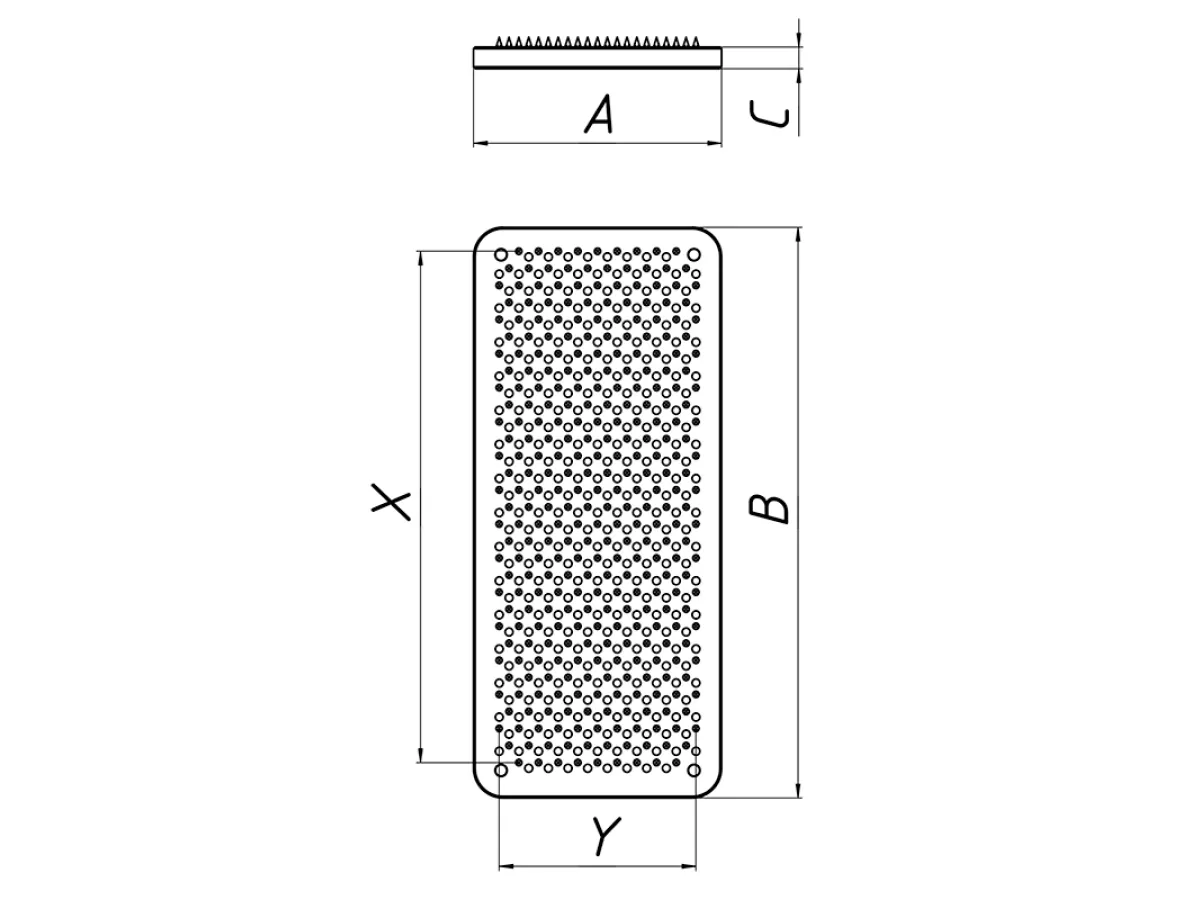
The next step is to choose the size of the board depending on the size of your foot. It is important to pay attention not so much to the overall size of the board as to the size of the nail field. The nail field should be larger than the foot by at least 0.5 cm; this adds convenience during use. You won’t have to carefully and cautiously align your foot on the board. It is important that the entire sole is on the nails; otherwise, there will be zones without stimulation. For convenience, the dimensions of the nail field and the corresponding foot size according to European standards are indicated in the model description on our website. If the board will be used locally without frequent travel between locations, you can choose a size with a significant margin. This will allow for more comfortable practice, and the extra weight and bulk will not be a disadvantage.
To fully benefit from the use of myostimulation (stimulation with weak electrical impulses) during practice on the boards, as described in a separate article, it is worth paying attention to the support of this function in the model description.
The main elements directly affecting the practice have now been listed. The key factors are the nails, their material, arrangement, distance between them, and the ability to conduct electricity. In short, everything your soles will come into contact with. Next, we will briefly discuss secondary criteria for choosing boards.
Materials used for the board body include wood, plywood, plastic, and rubber. Compared to wood, plywood is cheaper and has similar performance characteristics. Plywood is a more technologically advanced material when the goal is to make a board as compact, lightweight, and inexpensive as possible. Plywood’s moisture resistance is lower than that of wood. However, if the boards are not exposed to moisture, plywood and wood serve equally well. There are many ways to protect wooden surfaces from mechanical impact and moisture, such as paint, varnish, oil, and wax. Plastic and rubber have perfect moisture resistance and often weigh less than wood-derived materials. Moreover, rubber can bend over a wide range.
Other characteristics of the board, such as shape, color, design, etc., are not significant from a practical point of view, and everyone can choose according to their taste. The main thing is that the board should be pleasing and inspire productive practice, which I wish for you.
Engineer-Designer Dmytro
Photos
09/08/2024 16:25:50
Views:3768